
There are very few monsters who warrant the fear we have of them.
Andre Gide.
It’s something I don’t admit very often, but I’ve always been scared of the dark. Or more accurately, scared in the dark. That was at the root of my monster problem!
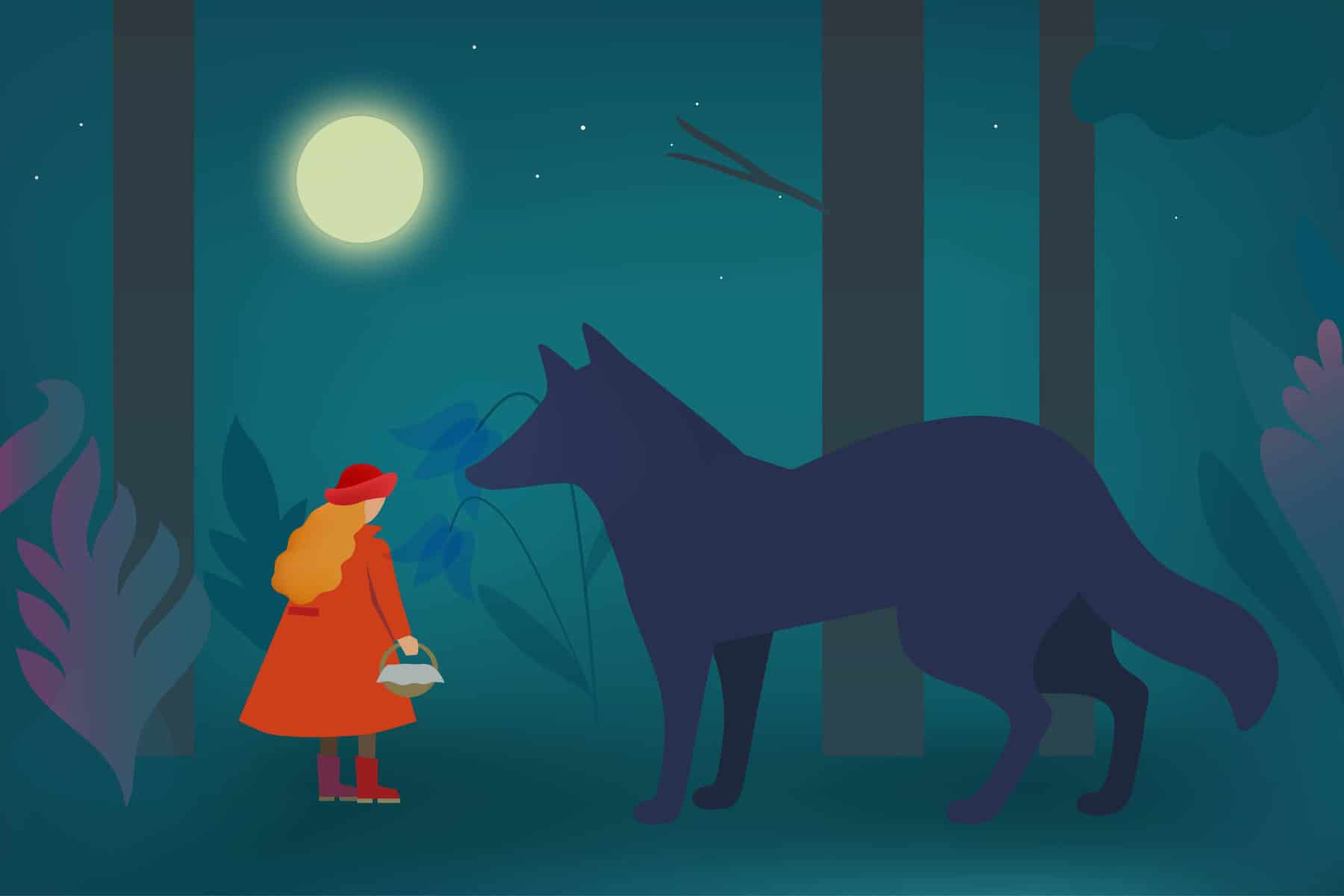
When I was a child it was monsters under the bed (and in the wardrobe and behind the curtains – just about anywhere I could imagine something scary hiding out of sight). When I was a bit older I was scared of wolves. Thanks, Little Red Riding Hood.
Move on a few years, and I was scared of intruders and… ghosts. The common thread was I was only scared when it was dark.
I can still vividly remember scenes from some of my childhood nightmares. In one, I’m hiding behind the sofa in a B&B we stayed in the summer I was four years old. I can still feel the terror of knowing there was a monster in the room and if I breathed or moved a hair it would know I was there…
In another, a few years later, I’m paralysed with fear as a wolf bangs on the back door of my childhood home – presumably eager to eat me up.
COULD IT BE AN ADHD THING?
I always thought it was just one of my many inadequacies. But recently I was reading ADHD expert Tamara Rosier’s brilliant book Your Brain’s Not Broken. I was amazed to read that a lot of children with ADHD have a monster problem.
It’s somehow comforting to know it wasn’t just me!
Dr Rosier believes this phenomenon is due to the power of the ADHD child’s imagination which goes into overdrive when they get anxious. Their inventive brain concocts a story that turns the anxiety into full-blown fear and voilà – monsters!
And it’s not just children. Dr Rosier has found that adults with ADHD have monsters too – just not always (but sometimes!) the literal kind.
As she puts it, “Two of our natural ADHD tendencies—divergent thinking patterns and lack of emotional regulation—collide to create vicious and scary monsters from everyday occurrences… Our divergent thinking patterns give us astonishing imaginative and cognitive power. But we can mismanage our thinking ability when we create monsters out of ordinary items and events.”
WHAT ARE YOUR MONSTERS?
Since a vivid imagination and emotional dysregulation are such common ADHD traits, you almost certainly have your monsters too. What are they?
Do you have to double and triple check you’ve locked the doors (and check under the bed…) when you’re on your own at night, like me?
Maybe your monster is the thing that stresses you out the most – like public speaking or having to network with people you don’t know. Or a generalised fear, such as fear of rejection or fear of a loved one dying.
Our personal monsters feel totally real to us. They can seep into everything and colour our lives.
But this doesn’t mean our lives have to be ruled by our fears.
HOW WE CAN TAME OUR MONSTERS
Face your fear head-on
Something Ralph Waldo Emerson once said is one of the keys to taming our fears: “Do the thing you fear and the death of fear is certain”.
In other words, face your fear head on. Get out from under the covers and you’ll see that the monster you’ve conjured up isn’t there at all.
Remember we don’t have to slay the monster right off the bat. We just need to take one small step: look it in the eye, challenge the thought that produces the fear. Take it one step at a time.
Challenge the thought behind the fear
When we’re in the grip of fear, though, it can be hard to think of anything else, which makes it almost impossible to break the cycle.
One of the strategies that helped me the most when I was facing up to my fear of the dark was this one. Breathing slowly in to a count of 5 and out to a count of 7 several times would calm me down and bring me back to the present moment. Then I would ask myself “Am I OK in this moment? And in this moment?”. I always was OK – safe – in the present moment.
By doing this consistently I finally saw that my monsters only existed in my imagination. Nothing bad had ever actually happened. It was fear itself that was holding me captive. And it was my own thoughts that were creating those feelings of fear!
What if your monster is something like fear of rejection? It’s pretty much the same thing. Your thoughts about a situation are producing the fear of being rejected. You need to challenge those thoughts – over and over again.
The best way to do this is by analysing the thought behind the feelings, then arguing with it.
So with my fear of intruders in the dark, the thought behind it went something like this: “I heard a noise, so someone must have broken into the flat. That means they’re going to come into the bedroom and murder me.” OK, I’m a drama queen!
Seeing this in writing really brings home the wild leap my mind was making. It would immediatel go from hearing a noise to assuming there was an intruder bent on murder. Asking what else the noise could mean elicits some far more rational possibilities.
It’s an old property, so there are various noises all the time – I just don’t notice during the day when I’m not hyper-vigilant. We’re surrounded on both sides and below by neighbours, and obviously they make noises. Our cat gets the zoomies some nights and runs up and down the landing when he realises he’s been deserted. There are often foxes in the garden and they sometimes jump on and off the fences, which can sound like there’s a person lurking outside.
FINAL THOUGHTS
ADHD gifts us with phenomenal imaginative powers, and on the downside, difficulty controlling our emotions. Given these two traits, we can conjure monsters apparently out of thin air.
So I still have the occasional sleepless night when something triggers that primitive fear response, usually when I’m in a strange place and feeling a bit insecure. Or when the foxes are particularly playful…
But using the techniques I’ve described above has made a huge difference to my quality of life (and sleep!). They can help with irrational fears of all kinds. Try them if you need help with yours.
And if you’ve got different techniques that work for you, please share them with us!